About FiveFourThreeTwoOne
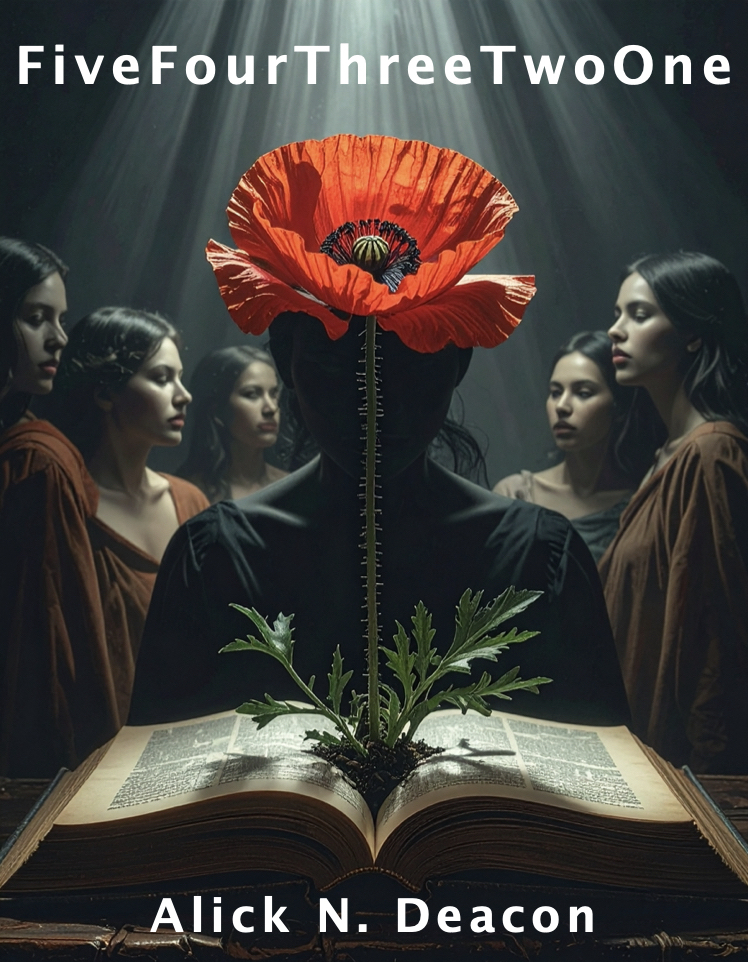
FiveFourThreeTwoOne began with an image.
Not a plot. Not a character. Not even a question.
Just the image of a poppy growing through the pages of a journal.
It was one of those ideas that arrives fully formed and refuses to leave. The problem, of course, was that it made absolutely no sense. A flower can't grow through a closed book. The image was impossible.
Which immediately made it interesting.
At first, I assumed the mystery was the flower itself. How did it get there? Why was it there? What did it mean?
But as the story developed, I realised I'd been looking in the wrong direction.
The poppy was never really the mystery. It was the breadcrumb.
The more interesting question was what had happened before anyone found it. What sequence of events had brought a group of complete strangers to precisely the point where this impossible discovery could bring them together? What hidden forces had already been shaping their lives long before the story started?
The novel gradually became less about explaining an impossible object and more about uncovering the unseen connections between people who initially appear to have little in common beyond their loneliness.
Because loneliness, more than grief, became the thread that tied everything together.
The characters in FiveFourThreeTwoOne are all searching for something: belonging, purpose, understanding, connection. They find themselves drawn together by circumstances none of them fully understand, each carrying their own baggage, secrets, and assumptions about the world. As they begin to uncover pieces of the puzzle, they also begin to discover one another.
Along the way, the story accidentally committed one of the crimes aspiring writers are frequently warned against.
It developed five protagonists.
Conventional wisdom says this is a terrible idea. Pick one main character. Keep things simple. Don't confuse the reader. Make your own life easier.
Naturally, I ignored all of that.
The more I explored the story, the more obvious it became that no single character could tell it. Different people noticed different things. The same event could carry entirely different meanings depending on who was experiencing it. Perspectives overlapped, diverged, contradicted one another, and occasionally revealed truths that another character couldn't possibly see.
Rather than fighting that structure, I leaned into it.
The result is a story told through five interconnected viewpoints, where understanding arrives gradually and every new perspective changes the shape of what came before.
Which, now that I think about it, is a lot like meeting people in real life.
Like many of my novels, FiveFourThreeTwoOne started with something impossible. But the longer I spent with the idea, the less interested I became in the impossible thing itself and the more interested I became in the people orbiting around it.
After all, a poppy growing through a book is certainly unusual.
The real mystery is how five lonely lives became entangled before any of them realised it.