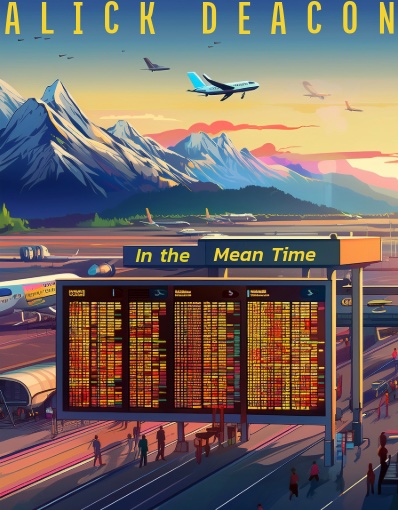
About Prediction
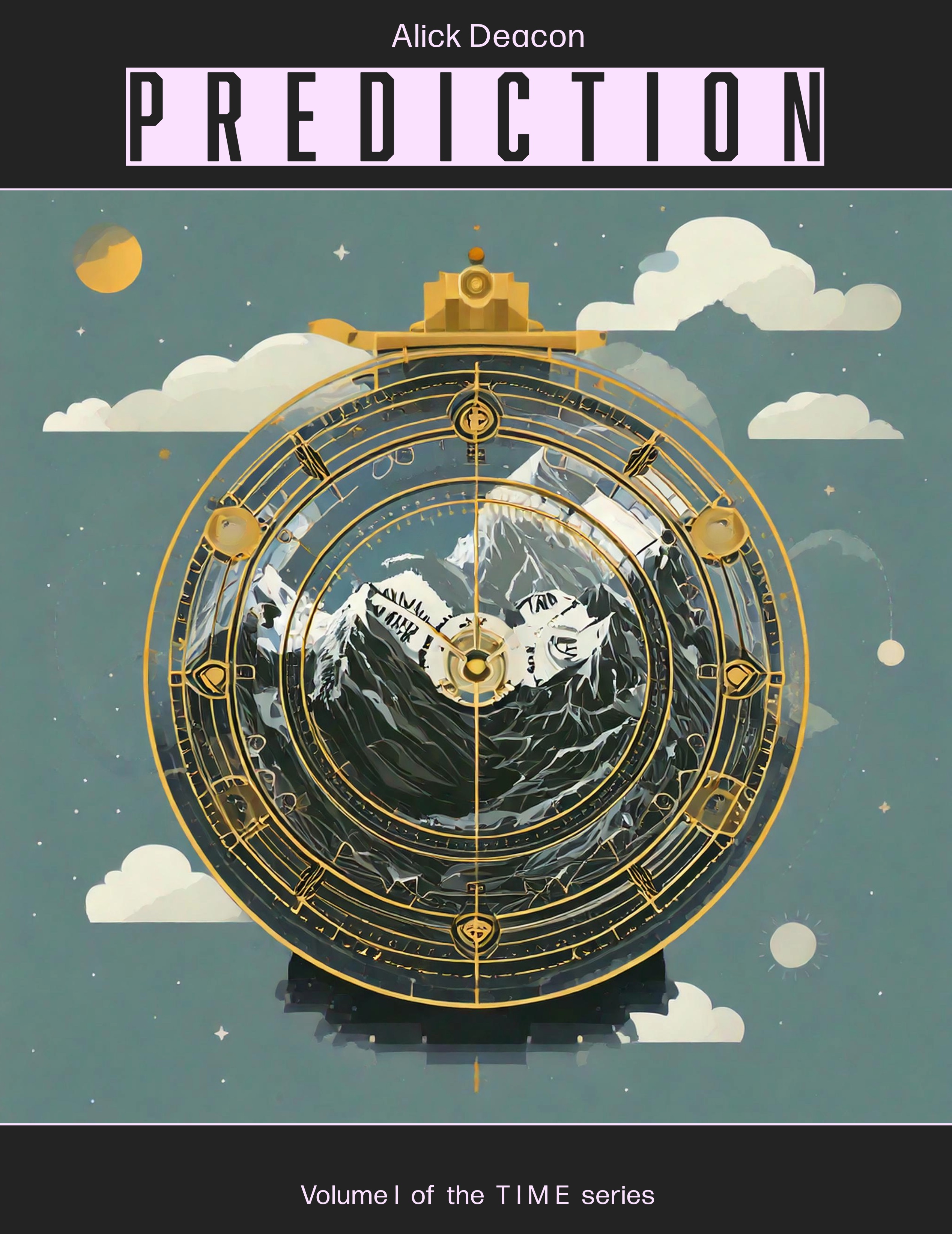
Prediction began, as many slightly dangerous ideas do, with a perfectly reasonable question: what if time travel wasn’t remarkable at all?
Not a secret experiment, not a government conspiracy — just… infrastructure. The sort of thing you quietly build into the background of everyday life until everyone forgets it was ever new. People would commute to different points in time the way they now commute to different cities. Holidays wouldn’t just be somewhere else, but somewhen else. Relationships could stretch across decades (or centuries) in ways that would make any normal family tree give up and lie down.
In other words, complete temporal chaos — but socially accepted.
Naturally, the next question was: what does that look like from the outside?
Because for all the people happily hopping backwards and forwards through time, someone has to be standing still. Someone has to experience events the old‑fashioned way — in order, one after another — while everyone else seems to know what’s coming next. And worse, behave like that’s perfectly normal.
That thought led to the heart of Prediction: a single protagonist anchored in a linear world, surrounded by people whose understanding of cause, effect, and consequence is… somewhat out of sync. Characters arrive knowing things they shouldn’t, leave without explanation, and treat the future with a level of casual familiarity that becomes increasingly unsettling the longer you think about it.
Which, of course, raises an obvious follow‑up question: who better to be trapped in that position than the person responsible for the whole mess?
Once that idea landed, the rest of the structure followed. The story was never going to fit into a single book — it needed space to unfold, to escalate, to let the consequences catch up with the premise. What began as a simple thought experiment about everyday time travel quickly revealed itself as something much larger, and Prediction became the first part of a deliberately constructed trilogy.
This opening volume explores the immediate aftermath of that world‑changing breakthrough: who embraces it, who resists it, and what happens when certainty about the future starts to replace uncertainty in the present. It turns out that knowing what’s coming doesn’t make life easier — it just raises the stakes in entirely new ways.
They say every story has a beginning, a middle, and an end.
This is very much the beginning.